
Christmas Messages for a Friend Who Is Having a Hard Time
Offer care without forcing holiday cheer: six original messages for a friend feeling low, a wording checklist, an AI editing prompt and private-sending guidance.
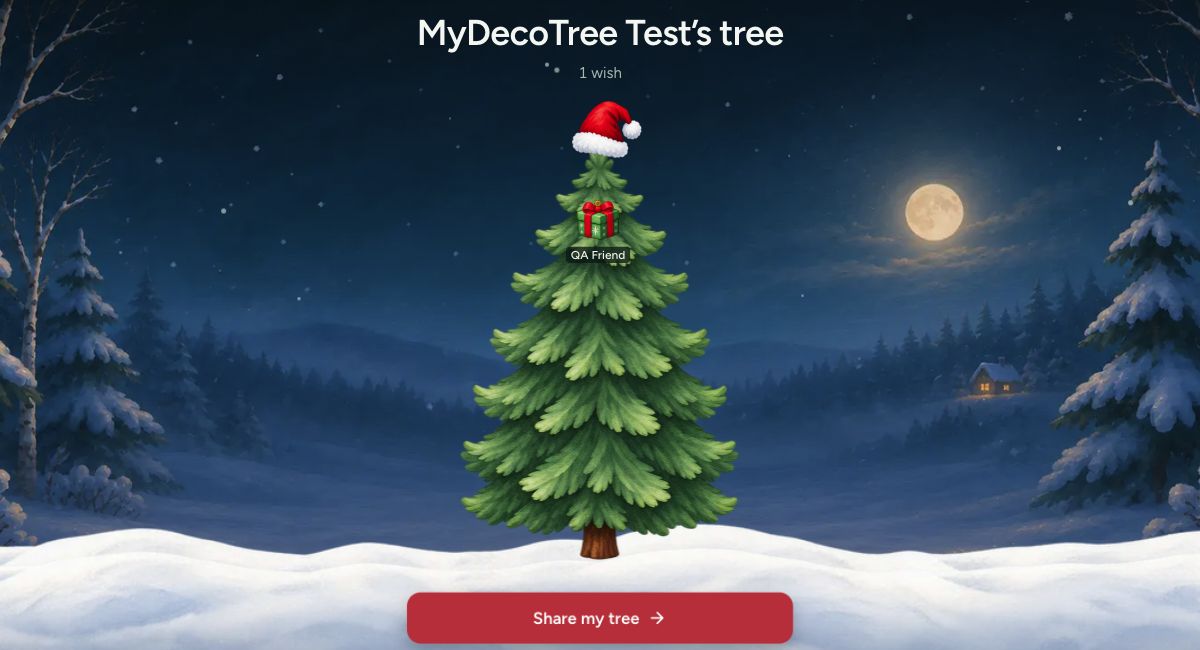
A Christmas message for a friend who is having a hard time can be warm without asking them to feel festive. Say you are thinking of them, add one true detail, and make it easy not to reply. A short, personal note is often a better fit than a speech about staying positive.
This guide is for ordinary friendship messages during a rough patch—feeling low, a disappointing year, a stressful transition or a breakup. Do not guess the cause or label your friend's feelings. The six examples are original wording to adapt, not a promise that a greeting will change someone's mood.
How do I encourage a friend without forcing Christmas cheer?
Start with what you actually know. If your friend has told you that things are difficult, acknowledge that briefly. If they have not, send a simple thinking-of-you message rather than announcing that you know something is wrong.
| Situation | A useful wording choice |
|---|---|
| They have shared that this is a hard season | Acknowledge it without asking them to explain again. |
| You are unsure what is happening | Say you are thinking of them; skip assumptions and questions about private details. |
| You can offer company or practical help | Give one real option they can comfortably decline. |
| Festive or religious language may not fit | Use a quiet year-end wish in their usual tone. |
Six Christmas messages for a friend feeling low
- A quiet check-in: “You crossed my mind while I was writing cards today. Sending a little warmth your way, with no need to answer.”
- After a disappointing year: “This year asked a lot of you. I'm glad our friendship was part of it, and I'd love another quiet coffee when you feel like it.”
- When they do not feel festive: “No big Christmas energy required. I'm happy to share a low-key walk or just trade a couple of messages if either sounds good.”
- After a breakup, if they have told you about it: “You don't owe anyone a cheerful holiday update. I'm thinking of you and would be glad to keep you company without making you talk about everything.”
- A practical offer you can keep: “I can bring dinner on Thursday if that would make the week easier. It's completely okay to say no; I'm thinking of you either way.”
- Without Christmas wording: “As the year closes, I'm sending a little care, not a request for a life update. You're welcome to reach out whenever you'd like some company.”
Choose one example, not the whole list. Keep only details that are true: do not imply a breakup they have not shared, invent a coffee tradition, or offer Thursday dinner if you cannot do it. Add your friend's usual name and one line that sounds like you.
What should I leave out of an encouraging message?
Remove “cheer up,” “others have it worse,” deadlines for feeling better and predictions that next year will fix everything. Avoid unsolicited relationship advice or questions that make them report how they are doing. An invitation is more comfortable when “no” is a real option.
Hallmark's encouragement-card guide includes simple thinking-of-you notes and specific offers of help. We use that broad approach here; the six messages above are newly written rather than quotations.
Can AI help me make the message sound more natural?
Use AI as an editor of your own words, not as a source of facts about your friend. Here is a prompt you can adapt:
Make this draft shorter and more natural in American English. Keep my actual offer of help. Do not add a diagnosis, a cause for my friend's feelings, a memory, advice or promises that things will improve. Remove pressure to be happy or reply. Draft: [your non-sensitive words].
Keep private conversations and personal histories out of the tool. Read the result yourself and remove anything you would not say. For more examples, see the AI Christmas message editing workflow.
Should I use a tree wish or contact my friend directly?
If you want to check in today, use your usual direct contact. On MyDecoTree at mydecotree.com, tree owners read wishes from December 25; the exact opening hour across time zones is not confirmed here. A sealed seasonal note should not replace a message you want them to receive now.
A tree wish can be a small extra gesture if your friend already shared their tree link and enjoys the activity. Do not ask them to create an account, make a tree or share your post in order to receive your care.
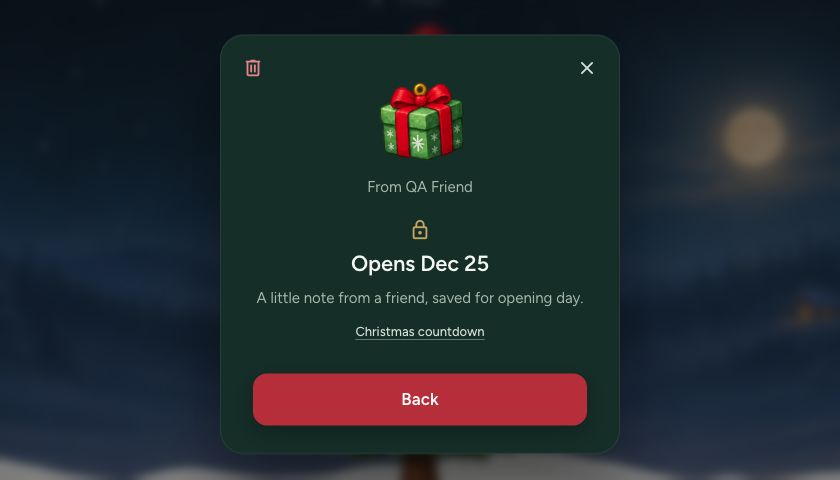
English interface and test example. The date explains why a tree wish is not an immediate check-in. Use your actual recipient's link.
How do I send a private Deco My Tree wish?
Open your friend's personal tree link, choose Leave a wish, write your note and pick a virtual ornament. Guests need no login or app download; complete verification if prompted. Keep Let others read it off for a private note. Hide my name controls the displayed signature separately; a familiar detail can still identify you.
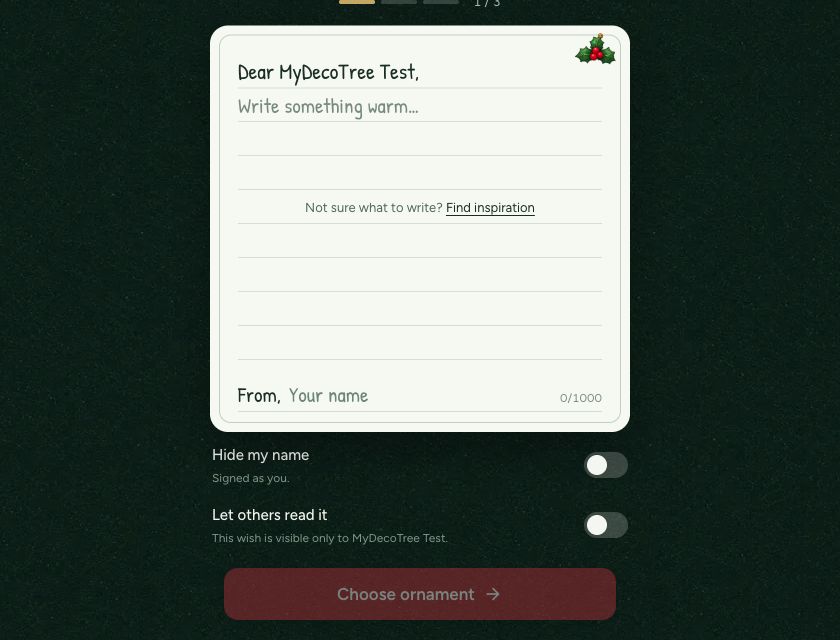
English interface and test example. Check your own recipient and settings; this screenshot is a demonstration.
Preview and wait for a success confirmation. Do not share their private situation, tree link or response without permission. The ornament is virtual, not a physical gift. Creating and saving your own tree requires signing in.
Guest wish steps · Message privacy · Opening dates · More Christmas wish ideas